Healthy Breakfast Ideas & Guides
# Insoluble vs Soluble Fibre: What's the Difference?
Published: 05/03/2026
AuthorBy Nestlé Cereals
Reading time: 5 min.
Share it with your friends
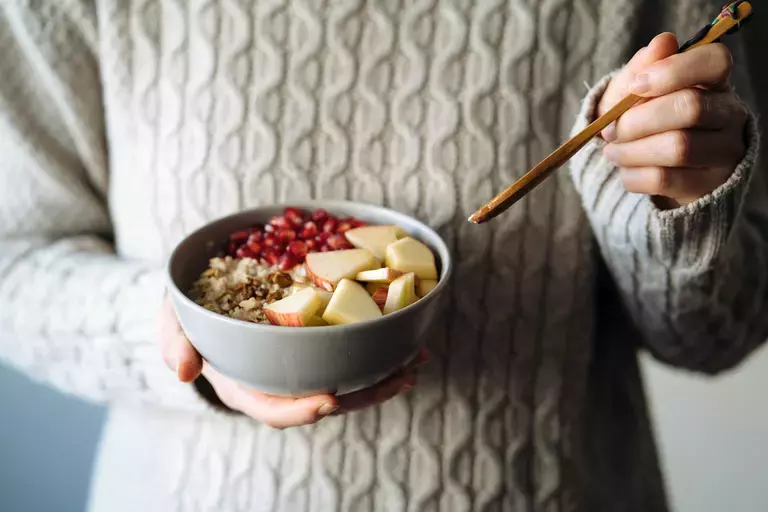
There are many different food types that come together to create a balanced diet, one of which being fibre. But did you know that there are in fact several different types of fibre that we need which we can get from a variety of foods in our diet. Two common terms used are soluble and insoluble fibre. To understand the key difference between the two, keep reading!
## What is Dietary Fibre?
‘Dietary fibre' is the term we use for a type of carbohydrate found naturally in plants, and it comes in different sorts including insoluble and soluble. Now, here's the interesting part: dietary fibre doesn't get fully broken down in your small intestine. It travels all the way to your large intestine without being fully digested.
When it comes to daily requirements, the UK Government recommends that everyone consumes 30g of fibre a day.
## What is Insoluble Fibre?
Insoluble fibre adds bulk to the stool and helps food pass more quickly through the digestive system. It does not dissolve in water and remains mostly intact as it moves through the digestive system.
## Foods That Contain Both Soluble Fibre and Insoluble Fibre:
- **Grains & Cereal-Based Foods** - Higher-fibre breakfast cereals, whole grain, wholewheat biscuits**,** oats, multigrain bread, brown rice and popcorn.
- **Starchy Vegetables** - Potatoes (with their skin on)
- **Vegetables** –Broccoli, Brussel sprouts and carrots
- **Fruits** – Apples, strawberries, raspberries, bananas, pears, avocado, dried fruit
- **Legumes & Pulses** – Beans
- **Nuts & Seeds**
## What is Soluble Fibre?
Soluble fibre dissolves in water, forming a gel-like substance and influences the texture of foods.
## Benefits of Soluble & Insoluble Fibre
There is evidence to suggest that diets high in dietary fibre (including both soluble and insoluble types) are associated with a number of health benefits including: improved digestive and heart health, a reduction in the risk of some diseases, a role in weight management and supporting a more favourable balance of bacteria in the gut.
Soluble Fibre, which dissolves in water to form a gel-like substance further supports healthy digestion and helps prevent constipation. It's commonly found in high-fibre breakfast cereals, along with fruits, vegetables, and [whole grains](https://www.nestle-cereals.com/mt/nutrition/whole-grain). Insoluble fibre, on the other hand, adds bulk to the stool and helps food pass more quickly through the stomach and intestines.
## Insoluble vs Soluble Fibre: Key Differences
Soluble fibre dissolves in water and forms a gel-like substance in the gut. It also contributes to an increase in faecal bulk, making it easier to pass stools.
Insoluble fibre, on the other hand, does not dissolve in water and remains largely unchanged as it moves through the digestive system. This helps keep bowel movements regular, as long as there is enough fibre in the diet.
## Fancy a bit more fibre in your snacks and meals? Here's how:
1. **Kick off with a Fibrous Brekkie:** Look for cereals that are high in fibre per serving. We recommend our [Bitesize Shredded Wheat®](https://www.nestle-cereals.com/uk/brands/shredded-wheat/bitesize), topped with sliced banana or some berries for more fibre and flavour!
2. **Opt for Wholegrain:** Aim for at least half your grains to be wholegrain. Swap white bread for wholegrain, try brown rice, or give quinoa a go instead of your usual white rice. When it comes to cereals, you'll easily find our whole grain cereals in the cereal aisle thanks to the distinctive green banner on our boxes. You can be sure that all our cereals with the green banner have whole grain as the #1 ingredient.
3. **Baking with Wholegrain:** When baking, swap some or all of the white flour for wholemeal. You can also try adding crushed cereals like our [Shreddies®](https://www.nestle-cereals.com/uk/brands/shreddies) or [Cheerios®](https://www.nestle-cereals.com/uk/brands/cheerios) into your recipes.
4. **Love Legumes:** Beans, peas, and lentils are fibre champions. Add them to soups, salads, or whip up some nachos with black beans.
5. **Eat Your Five-A-Day:** Aim for at least five servings a day of fruit and vegetables. Fresh, frozen, or tinned – they all count (just keep an eye out for added sugars in tinned fruit and added salt in tinned veg).
6. **Smart Snacking:** Grab some fruit, slice up some of your favourite raw veg, a handful of popcorn, or wholemeal crackers. Nuts and dried fruits are also a great option – but be mindful of portion size as they can be higher in calories.
7. **Take it Steady and Remember to Hydrate:** If increasing your fibre intake, don't go overboard with the fibre too quickly, or you might get a bit of a tummy upset. Gradually increase your intake over a few weeks. And most importantly, drink plenty of water!
## Frequently Asked Questions
### How Much Fibre Should I be Eating?
According to the NHS, the recommended daily intake of fibre in the UK is 30 grams for adults, 15 grams a day for kids between 2-5 years old and 20 grams a day for kids between 5-11 years old. Aim for variety of different foods including whole grains, fruits, vegetables, legumes. Our fibre-rich cereals such as [Original Shreddies®](https://www.nestle-cereals.com/uk/brands/shreddies/original), or [Multigrain Cheerios®](https://www.nestle-cereals.com/uk/brands/cheerios/multigrain) can also help achieve the recommended amounts.
### Can You Eat Too Much Fibre?
Yes, excessive fibre intake could lead to uncomfortable digestive issues! It's important to have a balanced diet and to stick to the recommended amounts. If in doubt, always speak to your GP or healthcare professional.
### What Are the Signs of Fibre Deficiency?
Signs of fibre deficiency include constipation and irregular bowel movements. If in doubt, always speak to your GP or healthcare professional.
### Is Fibre Important for Children?
Yes, fibre is important for everyone as it helps support healthy digestion. It is important to note that the recommended intake varies by age and gender.
### What’s a Quick and Easy Dessert that Contains Fibre?
A quick and easy dessert you can make at home that is delicious and made with fibre containing ingredients such as Shreddies, oats, whole grain flour, carrot and banana is our [oat and carrot muffins](https://www.nestle-cereals.com/uk/cereal-recipes/savoury/cereal-oat-carrot-muffins). Give them a try!
PreviousNext