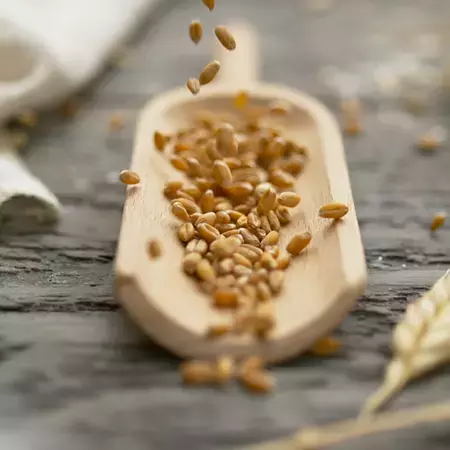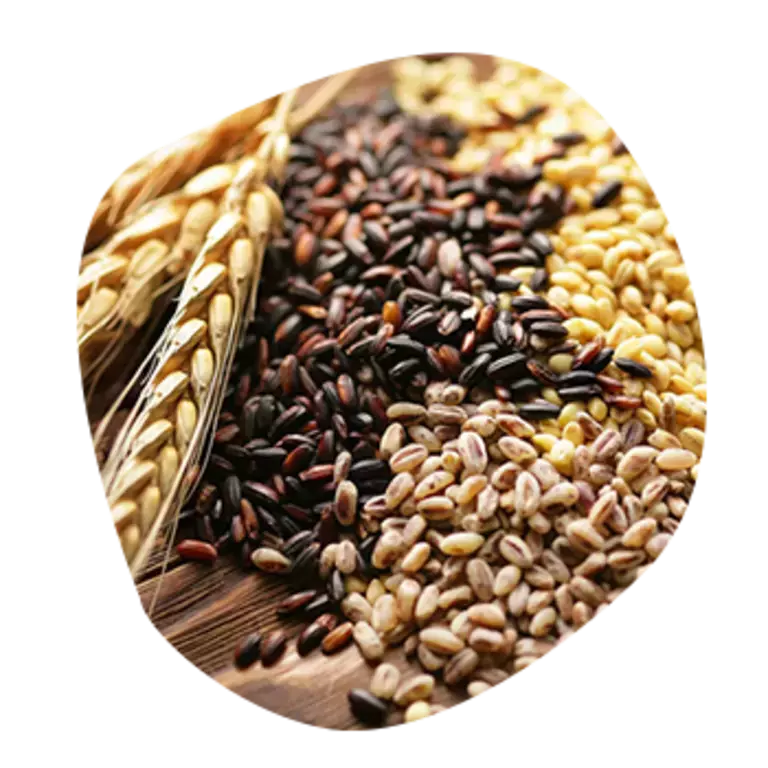
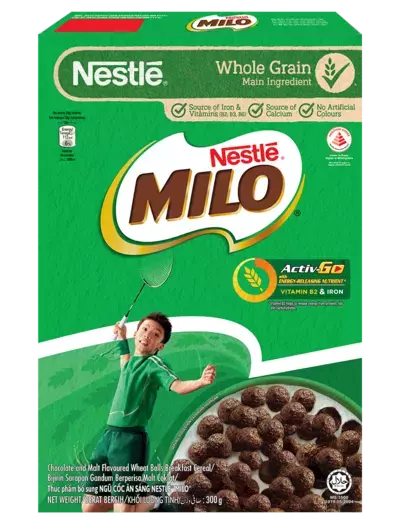
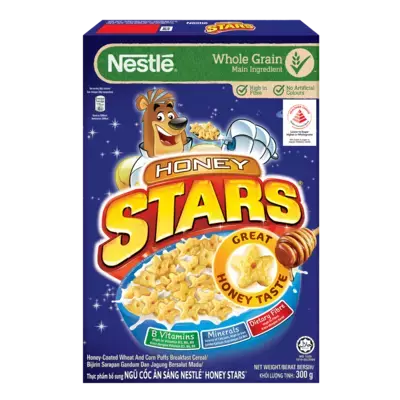
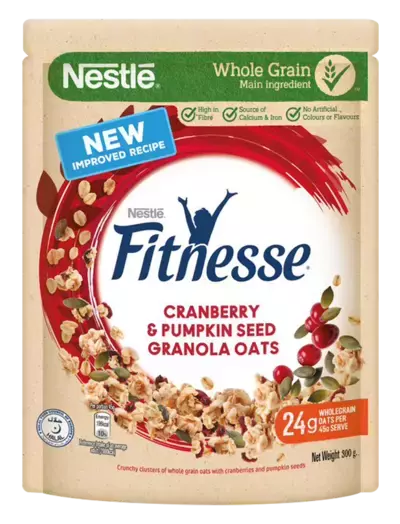
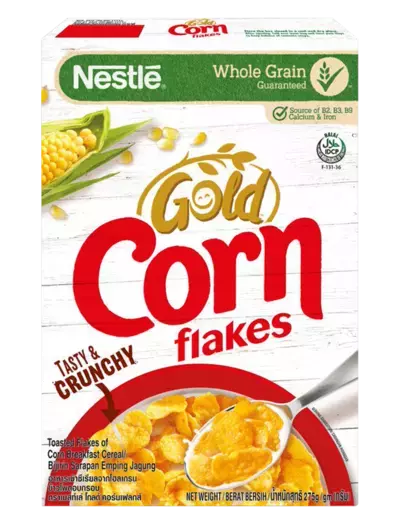
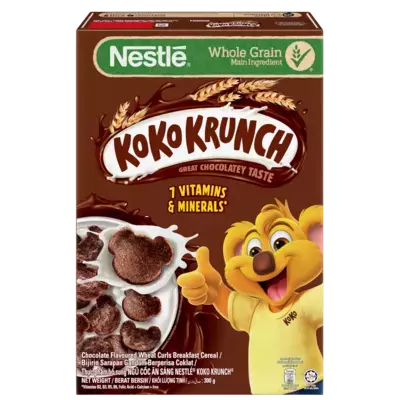
You said more whole grain & less sugar. So, we've listened and worked hard to improve, including making whole grain our main ingredient across the Nestlé Breakfast Cereals portfolio.

About 50%, which is about the same as products like butter. However, we only use small amounts of palm oil in most of our breakfast cereals, meaning no significant impact on the amount of saturated fat in our products.
Is Breakfast Cereal healthy?
Breakfast is part of a healthy and balanced diet:
• 99% of the portfolio has 3g or more fiber per 100g
• Over 76% of our cereals have equal to or less than 2 teaspoons of sugar (7.5g) per 30g serving
• 95% of our cereals have less than 450mg of sodium per 100g"
*data based on global Nestle Breakfast Cereals portfolio
Which Nestlé breakfast cereals are Gluten Free?
We produce corn flakes & rice pops, with availability differing across markets. They’re suitable for people looking for great-tasting breakfast cereal with no gluten, for example people with Coeliac Disease or gluten intolerance. For more detail click here
What minerals and vitamins does Nestlé enrich its breakfast cereals with?
Most Nestlé breakfast cereals are usually fortified with a minimum of 5 vitamins (B2, B6, niacin or B3, pantothenic acid or B5, folic acid or B9 and, in some recipes, vitamin D), and 2 minerals (calcium and iron).
Sugars from breakfast cereals make up around 5% of the average daily intake of added sugars for adults. Since 2013 we have reduced sugar in our products by 20%. Read more about our ingredients here.
How do I know how much sugar is in Nestlé breakfast cereals?
Simply check our packaging, clearly labelled in line food labelling requirements. Also, almost all of our cereals carry the ‘Nestlé Nutritional Compass’; a clear, transparent guide to how much protein, carbohydrate, fat and sugar is in a single portion.