Wondering what does fibre have to do with your breakfast, or any other meal? The answer is… a lot! Dietary fibre is the unsung hero on the list of things we should definitely make sure we have enough of in our meals. It’s so important and so many of us eat on average less fibre than our bodies need that the NHS increased the daily recommended intake in 2015. So, what actually is fibre, why do we need it and where can we get it from? Keep reading to find out!
Nutrition
What Is Fibre and How to Get More of It in Your Diet
Published: 07/08/2026
What is fibre?
Fibre (or dietary fibre) is a carbohydrate found in plants or added to foods and drinks. Unlike other carbohydrates, fibre cannot be digested by our bodies. Instead, it gets broken down by bacteria in the large intestine. There are two main types of dietary fibre: soluble and insoluble.
You might already know that fibre does not provide us with a lot of nutrients or energy. Although this is true, it doesn’t make dietary fibre a less worthy addition to our diets. Fibre does have an important role to play. It provides a source of food for the “good bacteria” in our digestive system, keeping it working as it should. So, make sure you don’t lose sight of this important element of a balanced diet for both kids and adults.
How much dietary fibre do we actually need?
So how much fibre should our meals contain? In adults, WHO recommends an intake of at least 25 g per day of naturally occurring dietary fibre
as consumed in foods (strong recommendation).
In children and adolescents, WHO suggests the following intakes of naturally occurring dietary
fibre as consumed in foods (conditional recommendation):
• 2–5 years old, at least 15 g per day
• 6–9 years old, at least 21 g per day
• 10 years or older, at least 25 g per day Keep this in mind when checking the fibre content.
What is soluble fibre?
Soluble fibre is able to dissolve and form a gel-like substance that helps improve our digestion and prevent constipation. This type of dietary fibre can be found in high-fibre breakfast cereals, as well as fruits, vegetable and whole grains.
What is insoluble fibre?
Insoluble fibre doesn’t dissolve in our intestines and remains largely unchanged as it passes through our digestive system. It’s this quality that keeps our bowel movements regular as long as we have enough fibre in our diet. Brown rice, potatoes, wheat bran and nuts are good sources for this type of carbohydrate.
What foods are high in fibre? Top 20 delicious foods that also give us plenty of fibre
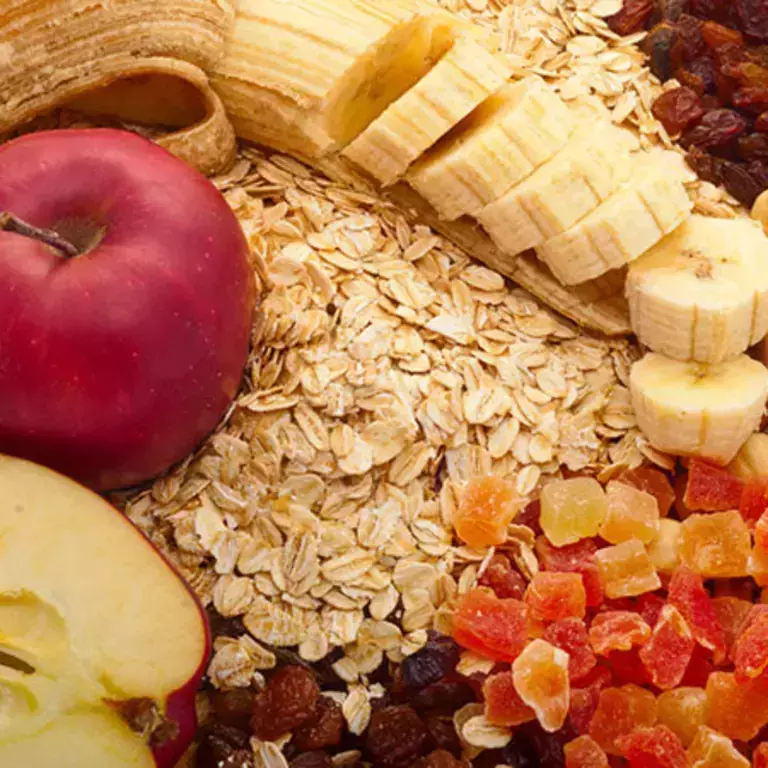
One of the best things about fibre is that there are many delightful food sources we can add to our diet that will give us a constant supply of this important carbohydrate. Whether you’re getting ready for breakfast, lunch, dinner or just sneaking in a well-deserved treat in between meals, there is always food high in fibre you can add to your plate that will take you closer to the daily recommended intake target.
Here is a list of 20 high-fibre foods to choose from for your next meal:
1. Higher-fibre breakfast cereals
2. Whole grains
3. Wholewheat biscuits
4. Potatoes (with their skin on)
5. Hummus
6. Beans (Foul)
7. Broccoli
8. Nuts
9. Oats
10. Multigrain bread
11. Brown rice
12. Dried fruit
13. Apples
14. Strawberries
15. Raspberries
16. Avocado
17. Brussels sprouts
18. Bananas
19. Pears
20. Carrots
There are so many delightful high-fibre food combinations you can have, no matter the meal of the day.

What breakfast cereals are high in fibre?
Start on the right foot towards your daily fibre goal first thing in the morning. So many of your favourite cereals are considered high in fibre (over 6g fibre/100g). From FITNESS Original to the chocolatey NESQUIK Cereal, the delicious CHEERIOS and CHOCOPIC, you can have a breakfast bursting not only with fibre, but also with deliciousness and amazing ingredients such as whole grains. Add a fruit topping to your cereal too such as apples or berries and you’ve got yourself a fibre-loving meal that’s ready in seconds.
We're taking action on fibre
Fibre is an important part of our diet, and we don’t eat enough. In fact, only 9% of adults consume the recommended amount of fibre. Action on Fibre aims to help bridge the gap between fibre intakes and the dietary recommendation by making higher fibre diets more appealing, normal and easy for the population.
But it’s not just fibre that we’re carefully including in our recipes. Next, find out why it’s important to eat whole grain in our day-to-day diet and how you can be sure the cereal contains at least 8 grams of whole grain in each serving.
Need simple and tasty ideas to help you add all these amazing foods to your diet? We’ve put together a few delicious tips and recipes so you can add more fibre to your breakfast without too much extra hassle.
